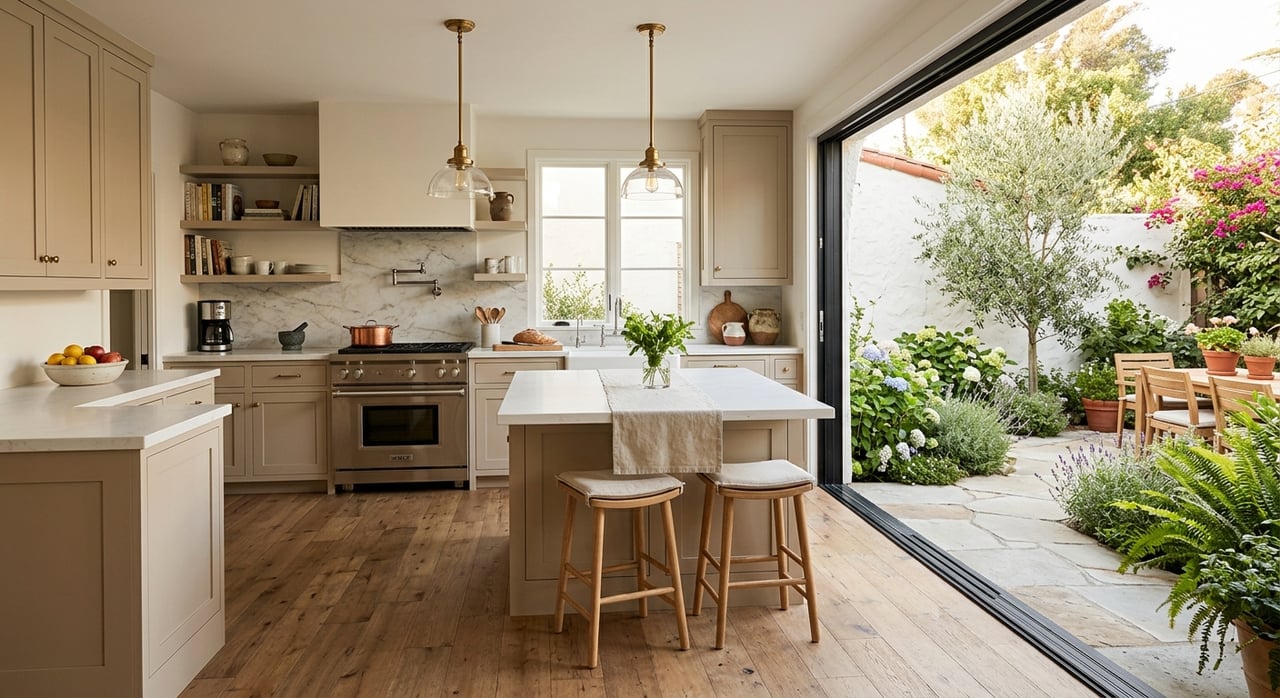
Living in Thousand Oaks: Parks, Dining, and Daily Commutes
May 14, 2026
May 14, 2026
If you are thinking about a move to Thousand Oaks, everyday life likely matters just as much as square footage or price point. You want to know what a normal week feels like, from getting outside to grabbing dinner to making the morning commute work. The good news is that Thousand Oaks offers a lifestyle shaped by open space, practical convenience, and strong regional access. Let’s dive in.
Thousand Oaks has a suburban feel, but it is not cut off from the rest of the region. The city sits in Ventura County between Los Angeles and Santa Barbara, near the Santa Monica Mountains, which gives daily life a strong outdoor backdrop.
A big part of the city’s identity is its open space. According to the city, more than one-third of the community is designated open space, with more than 15,000 acres of natural publicly owned open space and about 150 miles of trails. That means nature is not just a weekend extra here. It is part of the rhythm of everyday living.
At the same time, Thousand Oaks is built around convenience. Rather than one dense, highly walkable downtown core, you will find a few concentrated shopping and dining areas, easy freeway access, and a lifestyle that tends to rely on driving for many day-to-day trips.
For many buyers, the biggest lifestyle draw in Thousand Oaks is how easy it is to spend time outdoors. The Conejo Recreation and Park District says it operates 52 parks, 12,500 acres of open space, more than 150 miles of multi-use trails, and a 3.5-acre dog park.
That scale matters because it gives you options. You can plan a longer hike, fit in a quick walk after work, bike on multi-use trails, or simply enjoy having preserved natural land woven into the community.
If you are exploring the area, Wildwood Park is one of the best examples of the local open-space system. The Conejo Open Space Conservation Agency describes it as the largest contiguous open-space unit in Thousand Oaks.
COSCA also explains that the open-space network was designed as a continuous ring of green around the city’s perimeter. In practical terms, that helps explain why outdoor access feels so present in Thousand Oaks. It is not limited to one isolated park. It is part of the city’s broader layout.
In some communities, parks are occasional destinations. In Thousand Oaks, they are more often part of everyday routine. You may find that a morning walk, a trail run, or an afternoon stop at a neighborhood park becomes a natural part of your schedule.
For buyers comparing Ventura County communities, this is one of the clearest tradeoffs and advantages. You get suburban residential living with meaningful access to trails, open hillsides, and recreation close to home.
When people picture a neighborhood lifestyle, they often ask whether there is a central main street or dining district. In Thousand Oaks, the answer is a bit different. The city offers a wide mix of shopping and dining, but it is organized more around major retail and commercial hubs than around a single compact urban center.
That setup works well for many residents because errands and dining are easy to combine. You can often knock out shopping, casual meals, and entertainment in the same general area.
A few major destinations help define the local pattern:
Together, these areas create much of the practical day-to-day convenience many residents use regularly. If you value easy access to restaurants, shopping centers, and services, Thousand Oaks offers that in a familiar suburban format.
The wider Conejo Valley also offers a broad restaurant scene. Conejo Valley’s tourism fact sheet says the area has nearly 400 unique restaurants, and local Thousand Oaks listings include bakeries and cafes, barbecue, Mexican options, a steakhouse, and a cocktail bar.
That range gives you flexibility. Whether you want something quick and casual or a more polished dinner out, you will likely find several options within a short drive.
Commute time is one of the biggest quality-of-life questions for buyers, especially if you are balancing work in multiple cities. In Thousand Oaks, the data suggests a commute pattern that is regionally connected but still relatively manageable compared with broader county and state averages.
Ventura County Public Health’s ACS-based indicator reports a mean travel time to work of 24.7 minutes in Thousand Oaks for the 2019 to 2023 estimate. That is below Ventura County’s 26.0 minutes and California’s 29.0 minutes.
For many households, that can be a meaningful plus. A shorter average commute often supports more time at home, more flexibility in your day, and an easier weekly routine.
Even with transit options available, Thousand Oaks remains strongly car-oriented. Ventura County Public Health’s ACS-based data shows 66.9% of workers drive alone, while 0.6% use public transportation.
That does not mean other options do not exist. It does mean that if you are considering a move here, it is smart to think of driving as the main day-to-day transportation mode for most regional trips.
SCAG’s local profile found that 30.8% of workers both lived and worked in Thousand Oaks. For outbound commuters, the largest outside destination was Los Angeles at 17.7%, followed by Westlake Village, Camarillo, Simi Valley, Ventura, Oxnard, Burbank, Agoura Hills, and Calabasas.
This helps paint a realistic picture of daily life. Some residents work locally, while others use Thousand Oaks as a home base with freeway access to a range of Ventura County and Los Angeles area job centers.
While Thousand Oaks is primarily car-based, the city does provide commuter support and transit links that may help depending on your routine. City transportation guidance points to park-and-ride locations at the Thousand Oaks Transportation Center, Janss Road at the 23 Freeway, and Borchard Road at the 101 Freeway.
The city also notes regional links to VCTC Intercity, Metro Line 161, LADOT Commuter Express 422 and 423, Metrolink, and Amtrak. Locally, Thousand Oaks Transit says its bus routes are designed to serve shopping centers, hospitals, parks, public facilities, and schools.
For riders who qualify, the city also offers ECTA CONNECT dial-a-ride service for seniors and ADA riders across eastern Ventura County. These options may not replace a car for every household, but they do add flexibility for certain schedules and needs.
For many buyers, Thousand Oaks comes down to a clear lifestyle equation. You get strong access to parks, trails, and open space, plus practical shopping and dining hubs and solid freeway connections across the region.
The tradeoff is that most households will still depend heavily on a car, especially for commuting and many errands. If you are hoping for a dense, urban, highly walkable setup, this may feel different from what you have in mind.
If, however, you want a suburban environment where nature is easy to enjoy and everyday convenience is built into the layout, Thousand Oaks can be very appealing. It offers a blend of outdoor access and day-to-day functionality that many buyers find easy to live with and enjoy.
When you are comparing neighborhoods or deciding whether a move makes sense, it helps to look beyond listings and ask how a place supports your real routine. That kind of clarity can make your home search more focused and your decision more confident.
If you are weighing a move in Thousand Oaks or anywhere in Ventura County, Alyssa Kirksey can help you evaluate neighborhoods, commute patterns, and lifestyle fit with the kind of thoughtful guidance that makes the process feel clear and manageable.
Stay up to date on the latest real estate trends.

I am committed to guiding you every step of the way—whether you're buying a home, selling a property, or securing a mortgage. Whatever your needs, I've got you covered.

2475 Townsgate Rd Ste 160 Westlake Village, CA 91361 Kirksey, Alyssa Rae Laurenti | CA DRE# 02095207