Simi Valley vs Moorpark Homes: How to Compare
June 4, 2026
June 4, 2026
If you are comparing single-family homes in Simi Valley and Moorpark, the biggest surprise may be how similar they look on the surface and how different they feel once you dig into price, housing age, lot patterns, and commute access. You may be trying to balance budget, home style, and day-to-day convenience all at once. This guide will help you understand where each city stands today so you can narrow your search with more confidence. Let’s dive in.
For many buyers, price is the first filter, and right now Simi Valley is generally the lower-priced option. Zillow’s home value index places Simi Valley at $839,862 and Moorpark at $944,766. Redfin’s latest median sale price data shows a similar pattern, with Simi Valley at $845,000 and Moorpark at $1,030,000.
That does not mean every Simi Valley home is a bargain or every Moorpark home is out of reach. It does mean that, at the city level, Moorpark tends to require a higher budget for a single-family home. If your goal is to keep your entry price lower while staying in a detached-home market, Simi Valley will often be the first place to look.
Neither market is especially slow right now. Redfin reports homes selling in about 46 days in Simi Valley and about 41 days in Moorpark, with roughly two offers per home in each city over the latest three-month window.
That tells you both cities are competitive, but not necessarily chaotic. You may still have time to evaluate options carefully, but well-priced homes can attract attention. In either city, preparation matters if you want to move quickly when the right home appears.
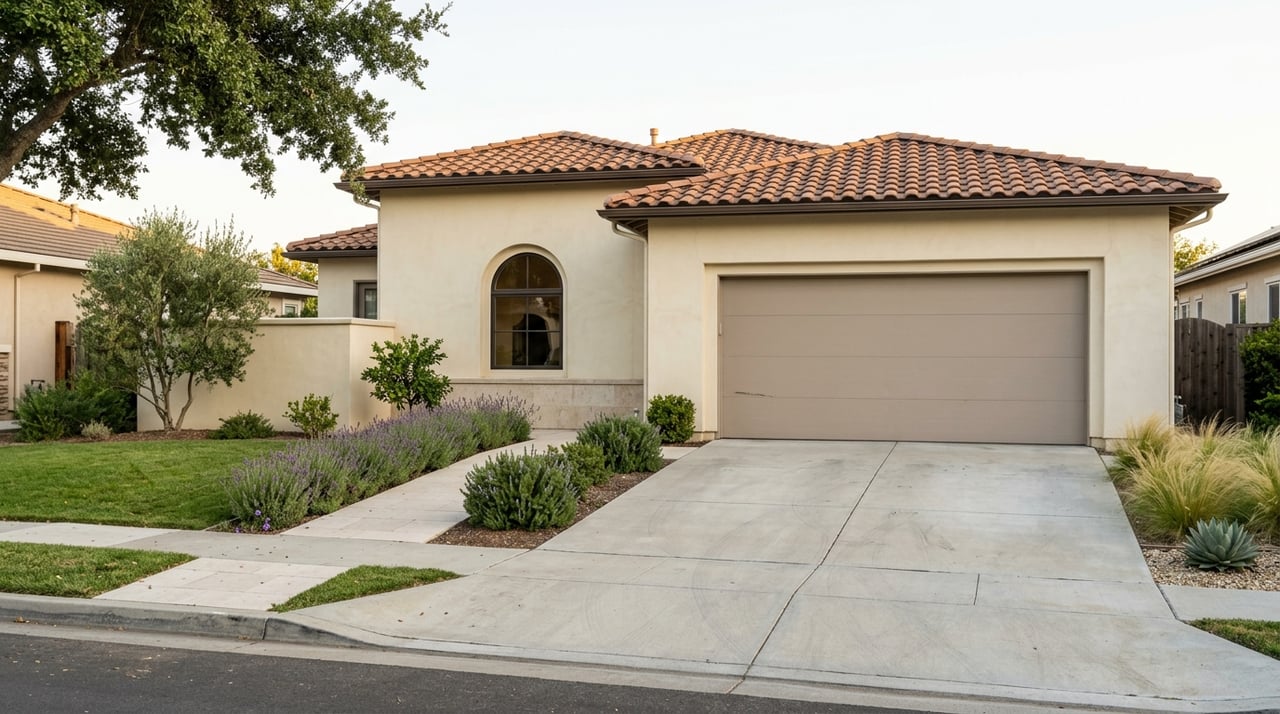
Simi Valley is a very strong single-family market, with the city reporting that 80.3% of homes are single-family and 72.4% are detached units. That gives buyers a broad base of detached housing to choose from across the city.
One of Simi Valley’s defining features is its age mix. The largest housing cohorts were built in the 1960s, 1970s, and 1980s, and the city notes that about 75% of the housing stock is more than 30 years old. About 34% is 50 years or older.
For you, that usually means more mature neighborhoods and a wider mix of original-condition homes, partially updated homes, and renovated homes. If you are comfortable with the idea of cosmetic improvements or system updates over time, Simi Valley may offer more choices in that category.
Older housing is not automatically a negative. In many cases, it can mean established streetscapes, larger variation in floor plans, and homes with character that has developed over time.
It can also mean you should look more carefully at condition. Roof age, windows, HVAC, plumbing, and electrical upgrades may play a bigger role in your decision in Simi Valley than they would in a newer tract. That makes the home-by-home comparison especially important.
Moorpark is also overwhelmingly single-family, with 8,686 single-family detached homes, or 77.1% of its housing units. Like Simi Valley, it is a strong detached-home market, but its housing profile is newer overall.
According to the city, 47% of homes were built in the 1980s, 16% in the 2000s, and 13% in the 1990s. In practical terms, Moorpark often feels more like a city shaped by planned subdivisions from the 1980s forward rather than one centered on 1960s and 1970s housing.
If you prefer a somewhat newer home base, Moorpark may stand out. Buyers often like the more consistent subdivision patterns, newer construction eras, and the possibility of fewer immediate update projects, though that often comes with a higher price point.
A newer housing mix can bring more uniform neighborhood layouts and floor plans that may feel more current in design. Depending on the property, you may also see fewer age-related issues than you would in an older home.
That said, newer does not always mean turnkey, and older does not always mean high maintenance. The real value comes from comparing condition, updates, lot size, and location together rather than assuming the build year tells the whole story.
Lot size is one of the biggest reasons citywide averages only tell part of the story. Both Simi Valley and Moorpark include suburban neighborhoods as well as larger-lot pockets, so your experience can vary a lot depending on the tract.
In Simi Valley, the city’s general plan notes that the RL zone is intended for a suburban single-family environment with a range of parcel sizes. The RVL zone is more semi-rural and requires a 20,000-square-foot minimum lot area. A current city project example, Runkle Canyon, includes detached estate lots on 20,000-square-foot minimum parcels as well as detached homes on average lots of about 7,700 square feet, with a minimum of 5,500 square feet in that neighborhood.
In Moorpark, the housing element lists the R-1 zone at a minimum net lot area of 6,225 square feet. Rural-residential categories increase from there to 10,000 square feet, 20,000 square feet, and even 1 acre. The city also includes larger-scale projects and estate-lot opportunities, including Moorpark Highlands and North Ranch.
If you want a more standard suburban lot, both cities can offer that. If you want more land, privacy, or a semi-rural feel, both cities also have areas worth watching.
The key is not to assume that one city is only tract homes and the other is only estate-style living. In both places, lot size and neighborhood pattern can shift noticeably from one area to the next. That is why the best comparison usually happens tract by tract, not just city by city.
Your daily drive can make one city feel much more practical than the other. Simi Valley is closely tied to the east-west 118 corridor. The city says Highway 118 runs through Simi Valley and connects with State Highways 23 and 101, as well as Interstates 5, 405, and 210.
Simi Valley is also about 37 miles northwest of downtown Los Angeles and has both Metrolink and Amtrak passenger service. Its transit Route 10 connects with LA Metro in Chatsworth, which can matter if your routine involves the San Fernando Valley or eastbound travel.
Moorpark also offers strong regional access. The city says it is served directly by the 23 and 118 freeways, with immediate connections to the 101, 126, 5, 405, and 210. Moorpark also has a downtown Metrolink station with regular service between Oxnard and Los Angeles Union Station.
Based on the freeway and transit layout, Simi Valley is often the more straightforward fit if your work or regular travel is tied to the San Fernando Valley or eastbound Los Angeles routes. Moorpark often works well for buyers balancing access to the Conejo Valley, Ventura County, and the 118 corridor.
This is not a formal ranking, but it is a helpful planning lens. If commute convenience is near the top of your list, map your real routes before choosing a city based on price alone.
Simi Valley is often the better fit if you want a lower entry price and a broader mix of mature single-family neighborhoods. You may find more variation in home age, condition, and layout, which can be a plus if you want options at different price and renovation levels.
Moorpark often has the edge if you want somewhat newer housing and strong access to multiple regional corridors. You may pay more, but you may also prefer the housing age profile and planned-subdivision feel.
Neither city is one-size-fits-all. The better choice depends on whether your top priorities are budget, home age, lot size, commute pattern, or a mix of all four.
The most useful takeaway is simple: city name alone does not tell you enough. Both Simi Valley and Moorpark have a wide spread of lot sizes, housing ages, and neighborhood types.
That is why a smart home search goes beyond city averages. When you compare homes tract by tract, you get a much clearer sense of value, lifestyle fit, and long-term comfort with your decision.
If you are weighing Simi Valley against Moorpark, having a local strategy can make the process much clearer. Alyssa Kirksey can help you compare neighborhoods, pricing, and property details so you can move forward with confidence.
Stay up to date on the latest real estate trends.

I am committed to guiding you every step of the way—whether you're buying a home, selling a property, or securing a mortgage. Whatever your needs, I've got you covered.

2475 Townsgate Rd Ste 160 Westlake Village, CA 91361 Kirksey, Alyssa Rae Laurenti | CA DRE# 02095207